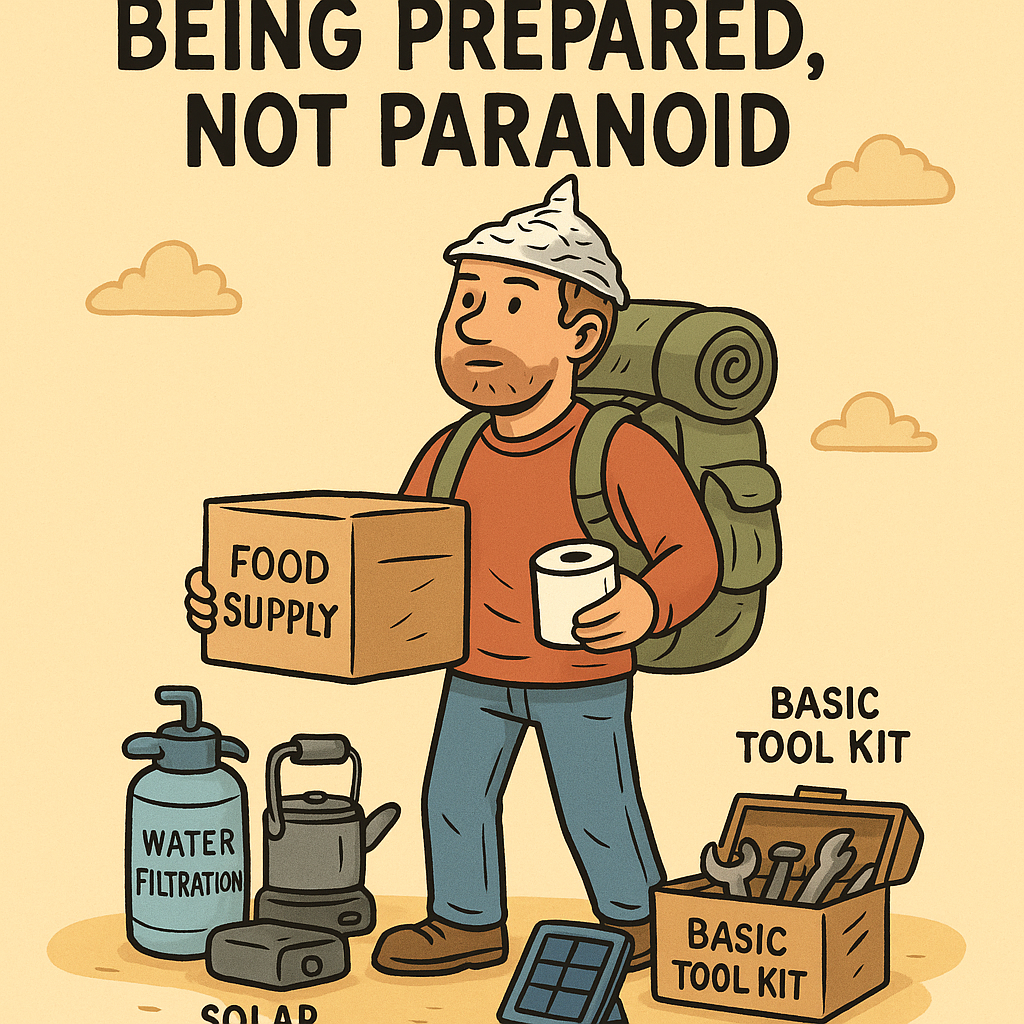
Prepared; Not Paranoid
Imagine you're at home.
It’s a normal weeknight. You’re cooking dinner, maybe yelling at the kids, and you finally sit down to relax.
It’s one of those evenings where everything feels routine… almost boring — which makes what happens next feel even stranger.
The power goes out.
No big deal. It happens.
You check your phone — no reception.
You look outside — pitch black.
Streetlights, houses, everything.
You shrug, grab a couple extra blankets because, well… it's Alberta and houses cool down fast without a furnace.
Morning comes. Still no power.
You decide to drive to work. You get in your vehicle, turn on the radio — static.
You start driving. Every traffic light is out. Cars are gridlocked. Nobody knows what’s going on.
You turn around and go home.
Now imagine this: A week later, still no power. No communication. Your home is cold. Your pantry is getting lean.
What do you do?
Most of us have never even considered that question.
A few weeks ago, my wife and I randomly put on a movie called “Leave the World Behind, ” staring Julia Roberts and Ethan Hawke.
It’s not your typical apocalypse movie. No aliens. No zombies. No asteroids.
Just one thing: the world goes dark…and never turns back on.
And for some reason, that scenario freaked me out more than any other disaster movie ever has.
It made me think: What if the power went out…in January? What if trucks stopped delivering food to the grocery store? What if the water from the tap simply… stopped flowing?
It was scary to think about, especially with two young kids. Sure, I can keep them warm with blankets and live off noodles for a couple days… but after that? Daddy has no plan.
Out of curiosity, I looked up the most likely “Modern Apocalypse” scenarios.
1. Solar Flares:
The Sun sends out massive bursts of energy called solar flares. The last major one that hit Earth was in 1859 and it fried telegraph systems. If an event hit today, experts estimate it could knock out large parts of the power grid for weeks, months, or years.
2. Nuclear Conflict
A nuclear detonation creates an electromagnetic pulse (EMP) that can instantly disable electronics in a wide radius. A single detonation in the atmosphere could knock out power, communication, and transportation across an entire region. Experts place the risk in the next few decades anywhere between 1–5% — which is low… but not zero.
3. Pandemic
Historically, pandemics that spread fast often disrupt supply chains, not necessarily electricity—but the effects are still huge: food shortages, medicine shortages, and delays in essential services. And of course this depends on the severity of the contagion. Studies suggest a 1–3% chance every year of another major pandemic.
None of these are likely to happen tomorrow, but remember, they’re not impossible.
After watching that movie, something clicked.
I thought: “I insure my truck. I insure my house. I even buy race insurance. Why not have survival insurance?!”
We spend our whole lives protecting the things we own. but not always the people we love.
So...I became a prepper. Not like a doomsday pepper you see on the history channel - I don't have a bunker in my backyard. I became a reasonable prepper.
Here's what I put together:
- Emergency Food Ration Bars
- Emergency Drinking Water Rations - Case of 64
- Aquatabs for 1 L - (50 / pkg)
- Lightsticks
- 36 Hour Candle
- WINDPROOF & Waterproof Storm Matches
- Camp Heat - For Folding Stove
- All Weather Emergency Heat Retention Bag
- Fire Disc Fire Starter
- Plastic Whistle
- Rain & Emergency Poncho
- Tube Tent
- 124 Piece First Aid Kit
And of course… toilet paper. Because we all know how important toilet paper is.
When we talk about rare, unpredictable disasters, the goal isn’t to panic, it’s to prepare.
It’s not about building a bunker. It’s not about being paranoid. It’s about being mindful of how fragile our systems really are.
Being prepared doesn’t make you paranoid. It makes you responsible.
Because if the day ever comes when the lights go out and they don’t turn back on… you’ll wish you had more than noodles and blankets.